
How to choose a yearbook theme your school will still like in June
Choose a theme with a cover you can read from across a room, colors and fonts that stay easy to read in print, and a look that suits your students more than your committee's taste. To browse designs, use the template finder. This page is the test to run on your shortlist.
What makes a cover work?
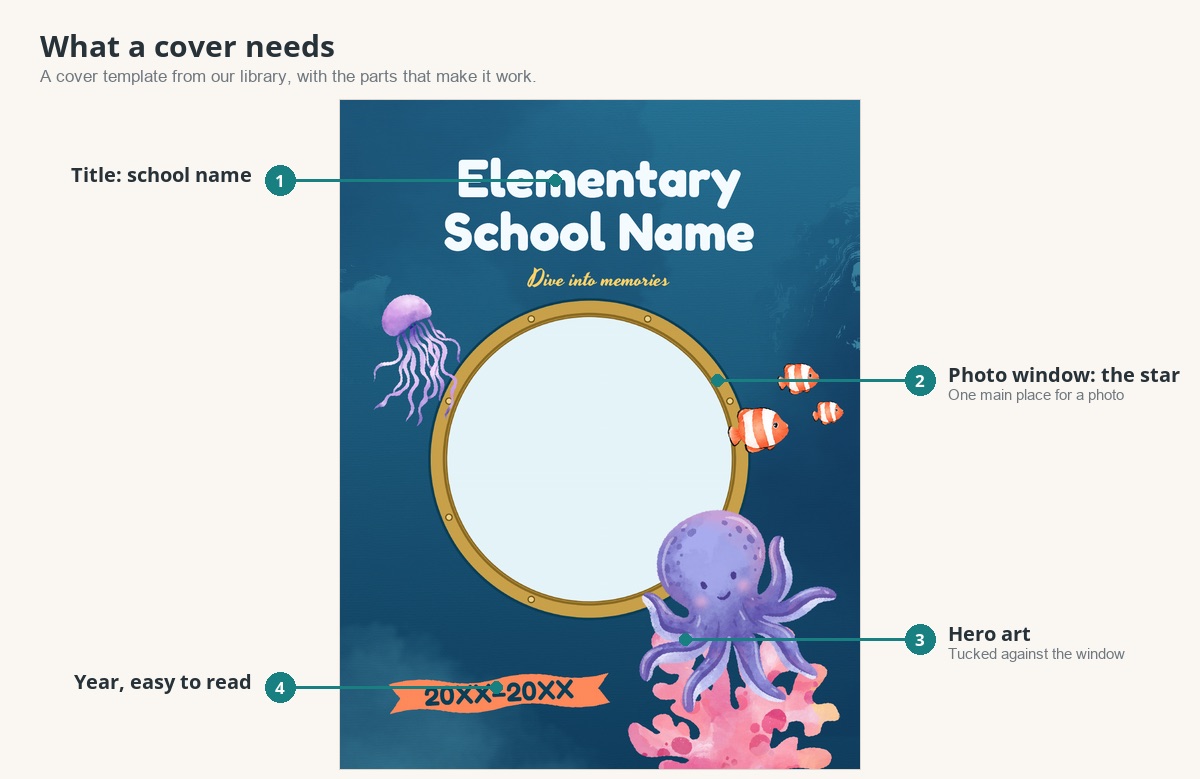
- One clear star. A single big photo or main picture, with artwork around it. Several equal pictures make the cover look like an inside page.
- A title you can read quickly. School name and year big enough to read from a few steps away. A tiny year in a corner is the most common miss.
- Artwork that matches the idea. If the theme is dinosaurs, show dinosaurs.
- Editable text. Keep the school name and year as text you can edit, not baked into a picture, so a typo can be fixed.
If your school runs a drawing contest, the winning art can be the star and may decide your palette, so pick the cover last. Cover art contest kit
How do I check colors and fonts?
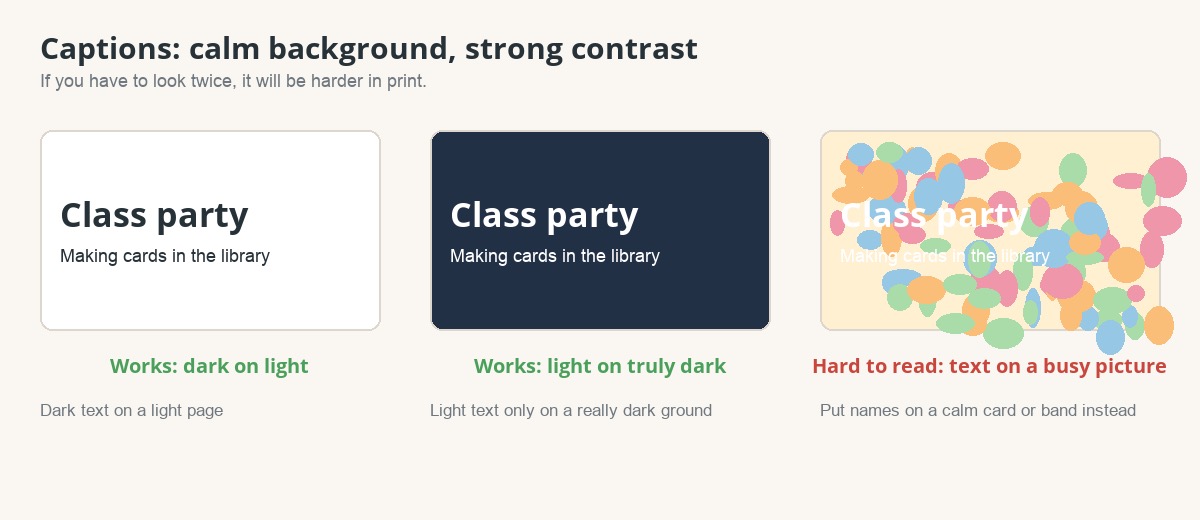
Use two or three main colors. The test is contrast: dark on light is safest, and mid-tones on mid-tones are where trouble starts. If you have to look twice to read a caption, the contrast is not enough. Print the cover and one inner page on a home printer and look at them in a bright room, because screen colors look flatter on paper.
Use one decorative font for titles and one plain, friendly font for everything else, and avoid thin lettering where children's names appear.
How does a committee actually decide?
- Ask a few children. A short vote at an assembly gives surprising answers.
- Ask what the year was about. A garden, a reading challenge, a new playground will matter more in June than a trend.
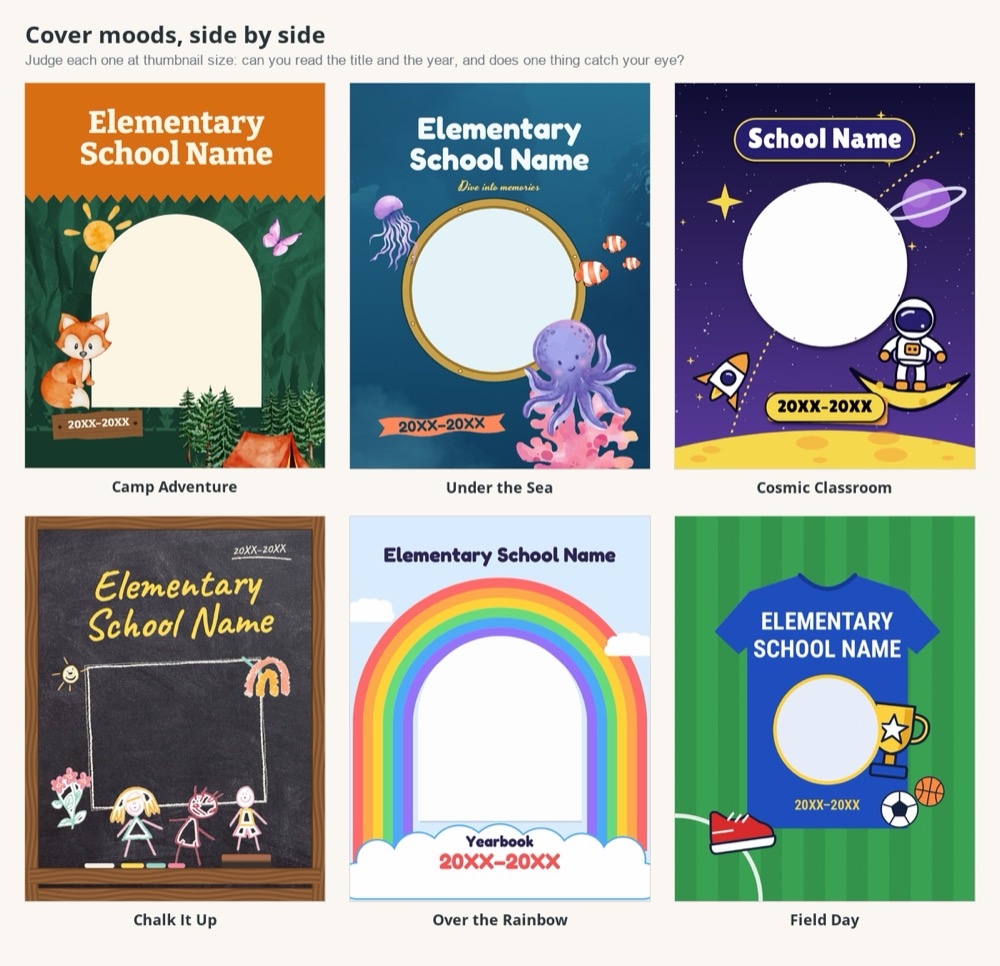
- Think about every child. A look built around one sport can leave other children feeling like guests. A design does not need your photos to match its subject: a camp-style look works with classroom photos.
- Avoid dated jokes and characters you do not own. Choose original art.
- Keep one style, front to back. Mixed drawing styles look like clip art.
When do I choose?
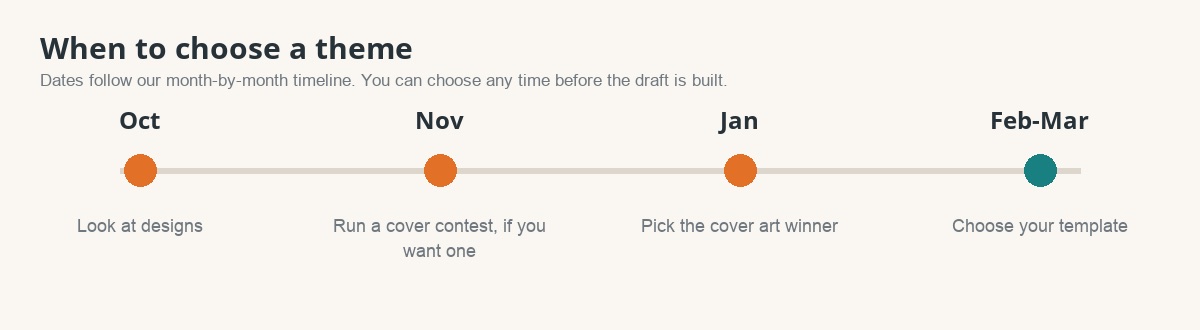
Not in the first week. Browse in October, start a cover contest in November if you want one, pick the winner in January, and choose the template in February or March.
What do I do this week?
- ☐ Write down three things your school did this year that you are proud of.
- ☐ Pick two or three designs that fit one of them.
- ☐ Show them to a few children and adults who are not on the committee.
- ☐ View each cover at thumbnail size. Can you read the school name and year?
- ☐ Write down the decision and the date for the next coordinator.
Can we change the theme later?
Usually yes, but pages already filled with photos need another look in a new design. Settle the cover and a few sample pages first, then commit.
How does this work at a Rethink school?
A school can pick or change its template at any time. March is typical if you use the free First Draft. We build the first draft from your ladder and your template choice, and you edit it from there. See the first-draft page · Get a quote and a sample
Their art on the cover.
Their year inside.
Every child is in the shared school pages of a Rethink yearbook, and families who choose personalization get pages built around their own child’s class and grade.