

The Rethink Yearbooks Story: Why I Built What Didn't Exist
- Mudita Singhal
- May 19
- 2 min read

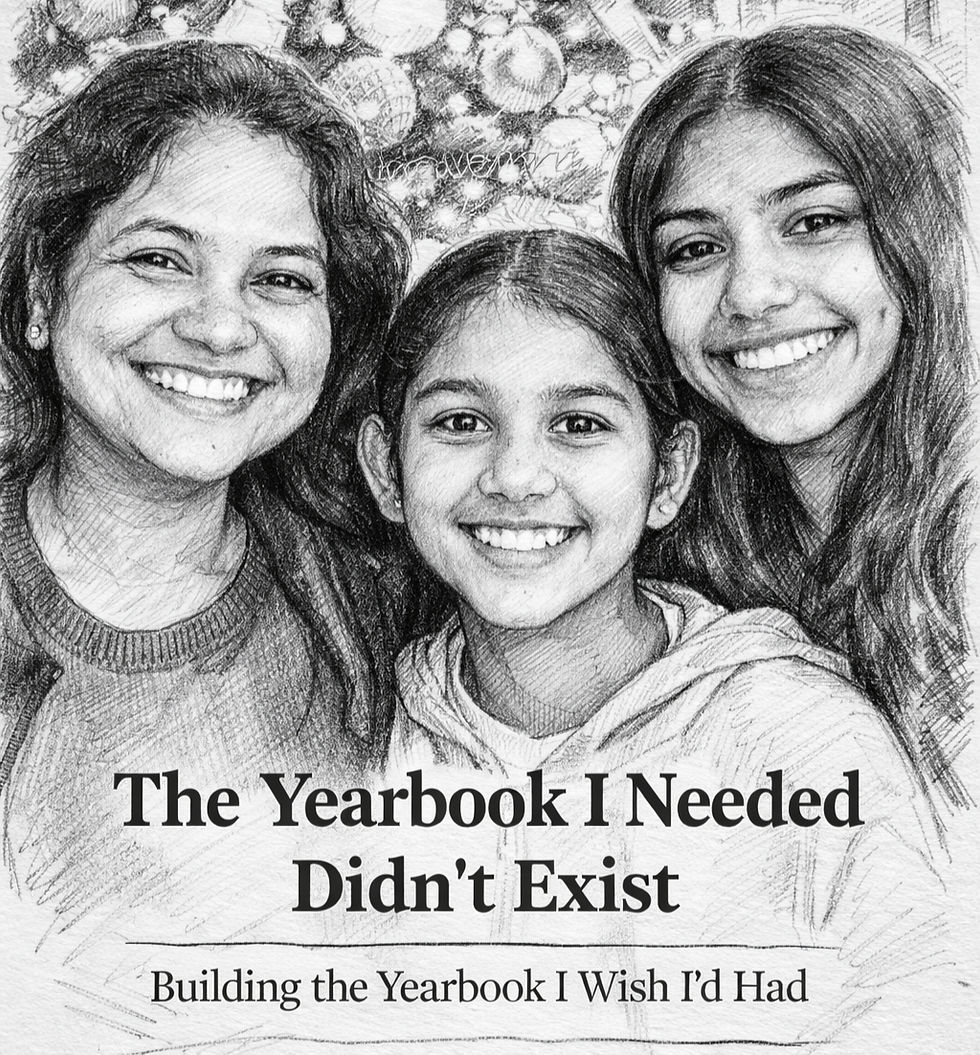
I didn’t start Rethink Yearbooks because I wanted to reinvent yearbooks.
I started it because I needed something that didn’t exist.
Like many parents, I spent long days away from my kids while they were at school—eight hours a day where they were learning, growing, changing, becoming people in ways I couldn’t fully see. I was present in their lives, deeply so. And yet, I carried a quiet guilt about the parts of their days I was missing.
Around the same time, I began to notice something else: how little I remembered about my own childhood. Whole years felt hazy. I could recall fragments—faces, classrooms, a handful of moments frozen in time—but not who I was becoming, or how those years shaped me. The photos existed somewhere, but the meaning around them had faded.
What I wanted wasn’t more pictures.
It was context.
That realization sharpened during conversations that stayed with me. One afternoon, sitting with a neighbor and a box of old photos, I watched how a single image could unlock entire stories. One photograph led to another, and suddenly a whole season of life came rushing back. Those moments weren’t precious because they were perfect. They mattered because they were connected.
That’s when I began thinking about yearbooks differently.
Yearbooks were created in a time when photos were rare. One portrait could stand in for an entire year. But today, photos are everywhere—on phones, in folders, scattered across clouds—and somehow they’re harder than ever to truly revisit. Traditional yearbooks haven’t kept up. They capture attendance, not experience. Presence, not becoming.
What if a yearbook could do more?
What if it could help children—and parents—see who a child was during the parts of the day we didn’t share? What they loved. Who they spent time with. How they changed over the course of a year. Not just a record of school, but a reflection of a life in motion.
Because memory-keeping isn’t just about nostalgia. It’s about self-discovery. When children see themselves over time, they learn who they are. When families revisit those memories together, they build connection. Photos—when given the right context—help us understand ourselves more clearly, even years later.
Kids grow up fast. We experience only a fraction of their days, and the moments we want to hold on to are fleeting. A single posed photo can’t carry that weight. What we need is something closer to a lifebook—one that tracks a child’s journey, not just a moment.
That’s why Rethink Yearbooks exists.
To remove the guilt of not having documented “enough.”
To fill the gaps where memories fade.
To make it easier for families to hold on to what matters—without adding more work.
Life has a way of taking us on unexpected journeys. This one led me here.
Let’s make yearbooks better.
Let’s make memories last.Let’s help kids remember their childhood—not perfectly, but meaningfully.
That’s the heart of Rethink Yearbooks.


Comments